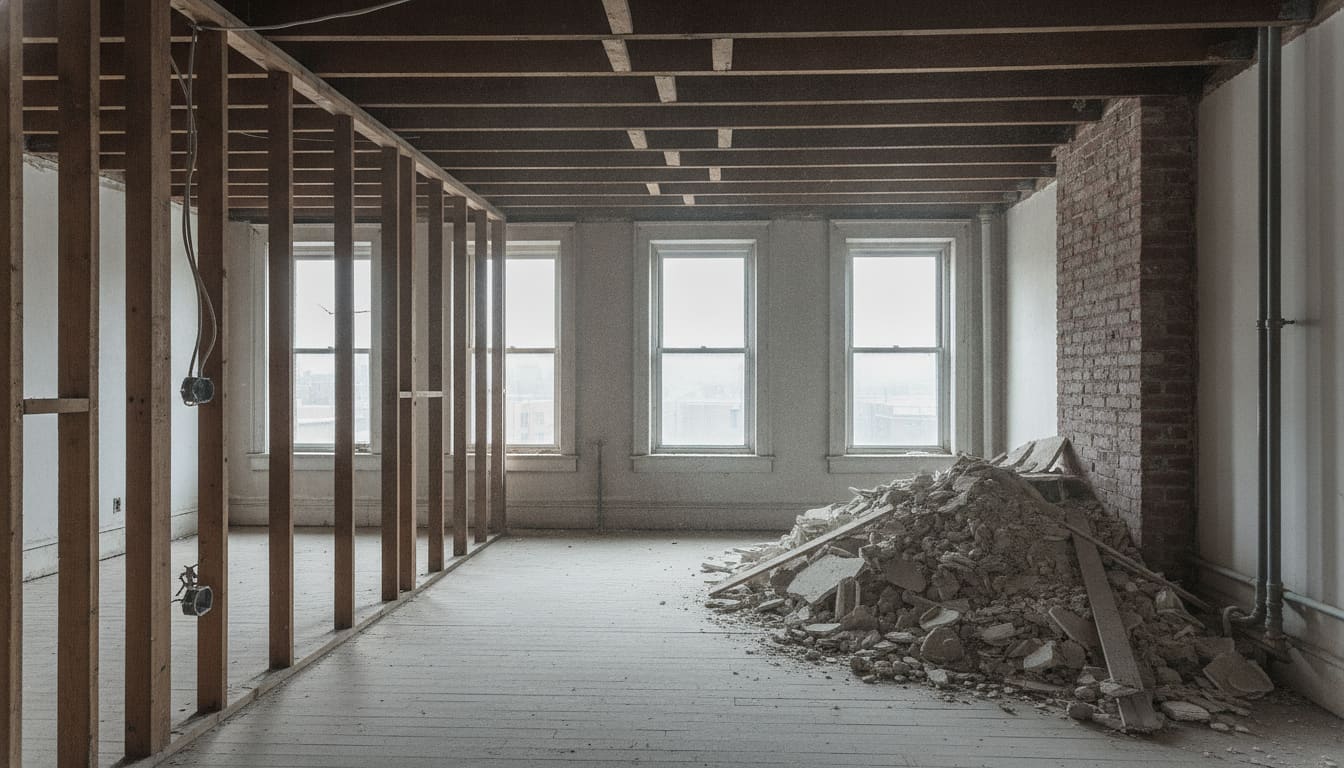
Interior demolition
Apartments, storefronts and whole floors stripped back to frame. Partitions, kitchens, bathrooms, ceilings, flooring, fixtures.

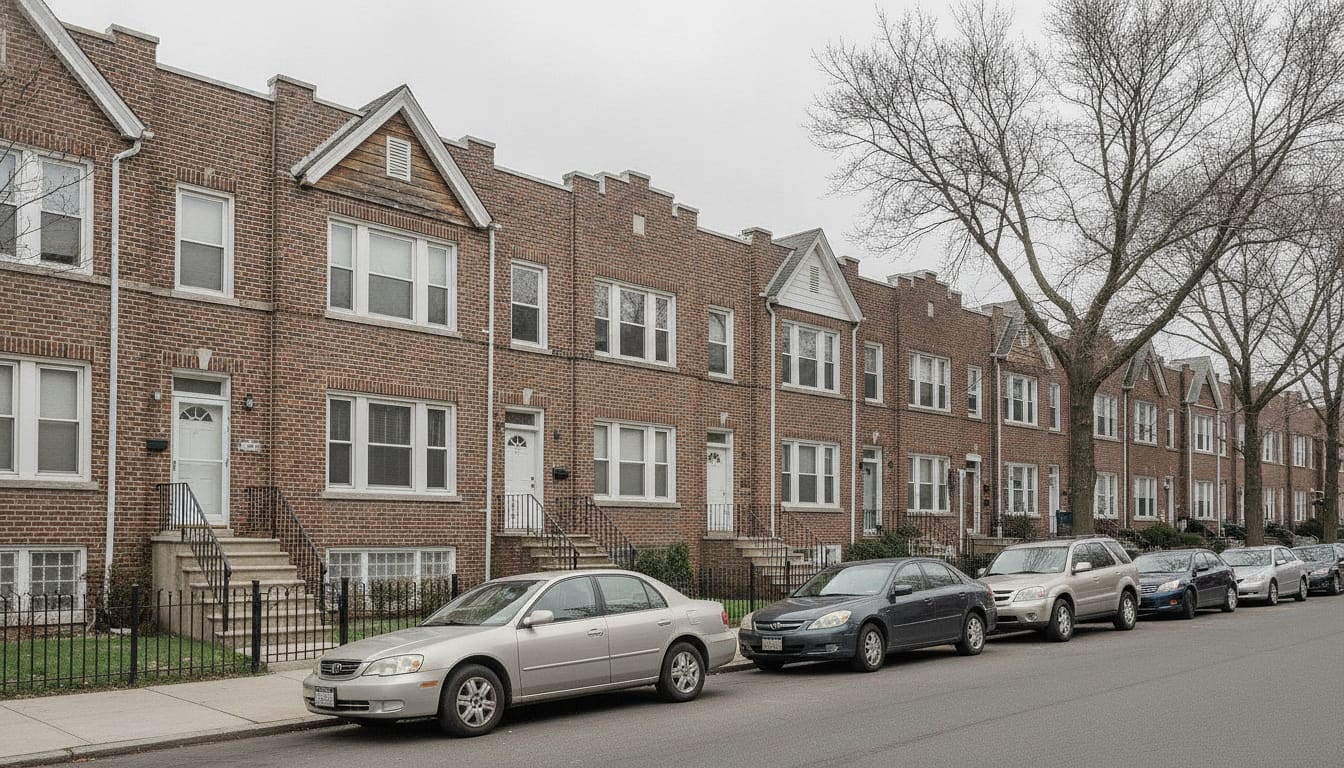
We are a demolition contractor based on Van Loon Street in Elmhurst, working across Queens and the rest of New York City.
Interiors stripped back. Structures taken down. Concrete broken out and carried away. Call and describe the job, and you will get a straight answer about what it involves.
We do three kinds of work. Each one is a different job with different constraints, so each has its own page.
Apartments, storefronts and whole floors stripped back to frame. Partitions, kitchens, bathrooms, ceilings, flooring, fixtures.
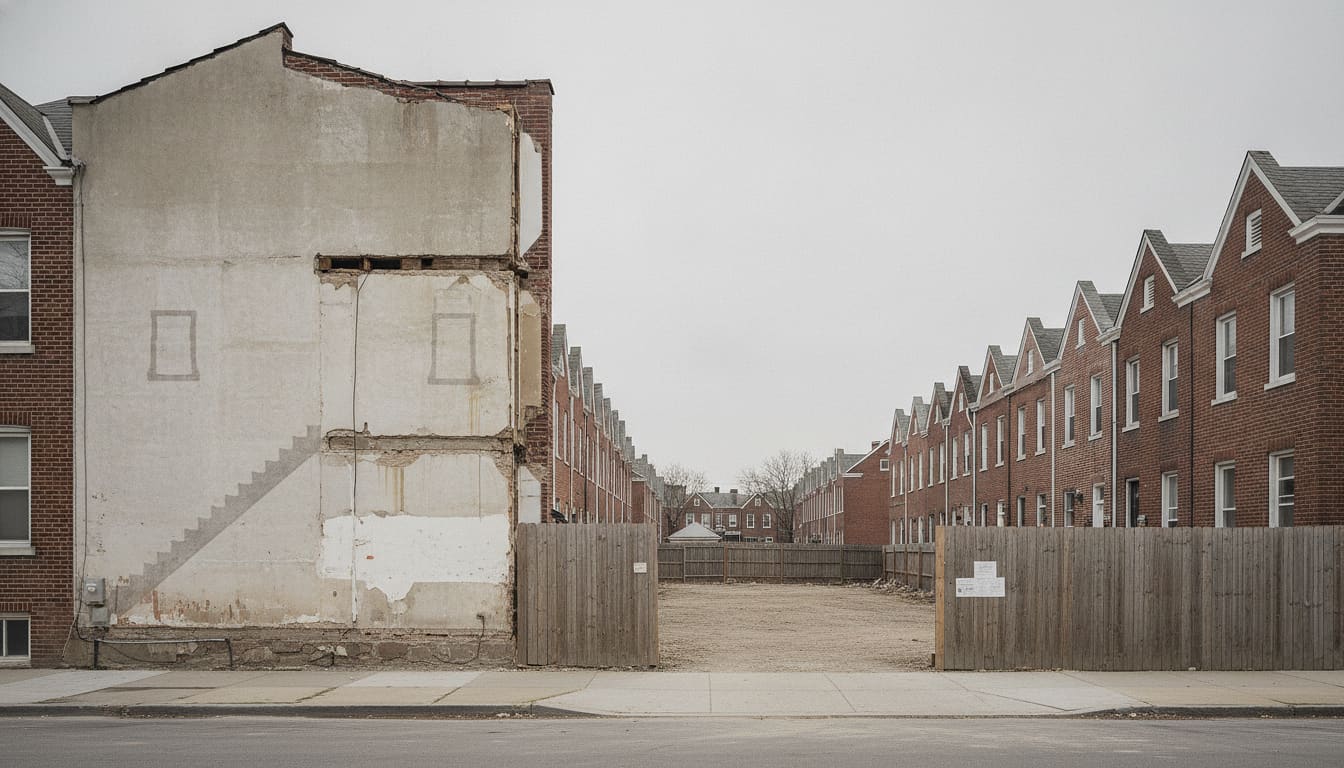
Houses, garages, sheds and partial takedowns, including attached and semi-attached structures with a shared wall.
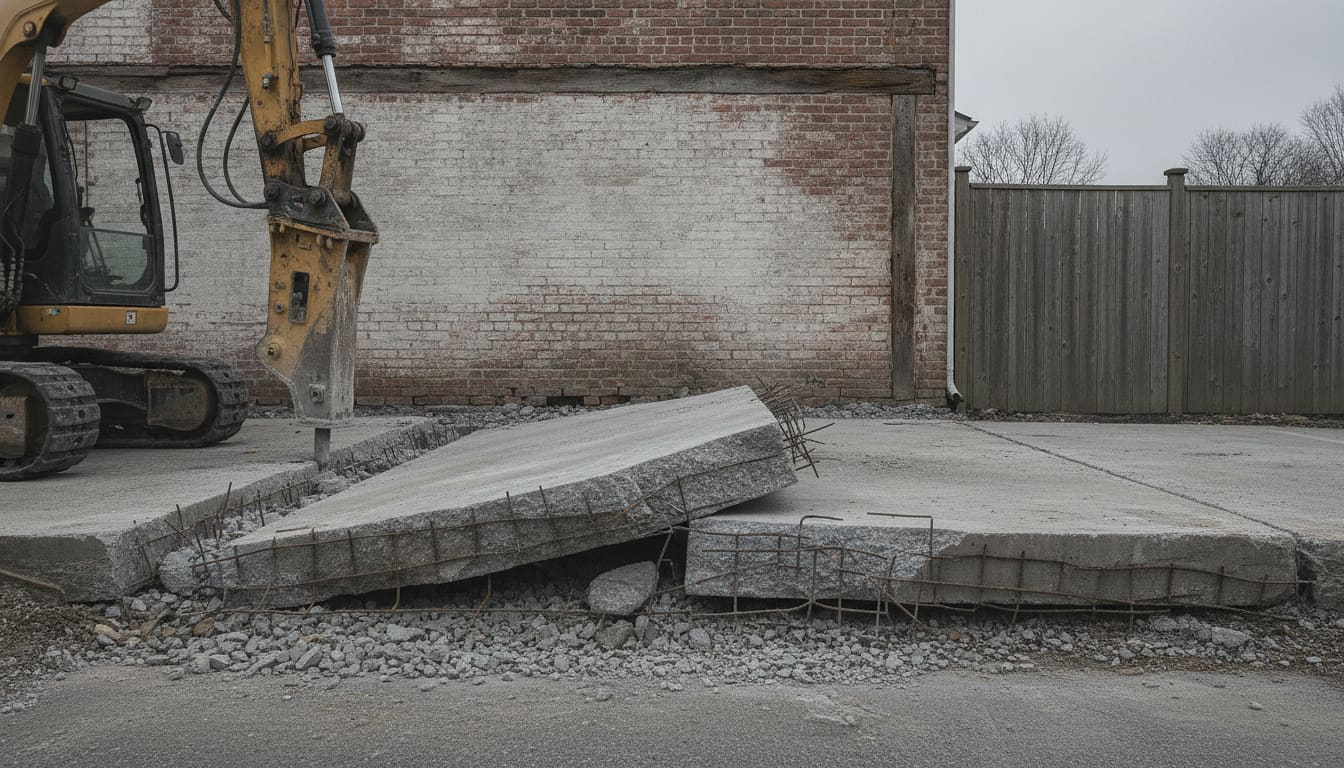
Driveways, walkways, patios, steps, slabs and footings broken out and removed.
If your job sits across two of those, say so on the call.
We are based in Elmhurst and work across Queens, and we take demolition work across New York City. Where we work sets out what changes from one part of the borough to the next.
Demolition makes a large amount of heavy material, and in New York City that material cannot go out with the household trash. Construction and demolition debris has to reach a registered facility, which means it has to be planned for before anything comes down.
So we plan it first. We work out roughly what volume the job will produce, where a container can legally stand, and how the material gets from where it is to where the container is. On an attached house with no driveway, that last part is often the longest step of the day.
What our own demolition generates, we take away. The site is left clear.
Most of the demolition advice online is written for a detached house with a driveway and a yard. Large parts of Queens are not that, and the difference changes how a job runs.
None of this stops a job. It just needs to be known before the first day, not discovered on it.
Call and describe what you have. The more specific you can be, the more useful the answer.
We will want to know what the building is, what is coming out, whether anyone is living or trading in it while the work happens, and how material can physically leave. On a walk-up or a building with a service elevator, we will ask about that too.
From there we look at the site. We check what is structural and what is not, where the utilities run, what has to be protected, and how the material moves. That visit is what turns a rough range into a real number.
Then you get the number, the sequence and what we need from you before the crew arrives.
Four things get you most of the way there. What the building is and roughly when it was built. What is coming out, room by room or structure by structure. Whether the building stays occupied while we work. And how material can physically get out to the street, including whether there is an elevator and whether a container can stand at the curb.
With those we can usually give you a range on the phone. The firm number comes after we have seen it.
It depends on volume, access and how much has to be protected. A single bathroom strip out and a whole floor taken back to frame are not the same job, and neither is a garage and a house.
The thing that stretches a schedule most often is not the demolition. It is the carry. If material has to go down three flights by hand rather than out a door to a container at the curb, the same volume takes considerably longer, and we would rather tell you that at the start than on day three.
To a registered facility. Construction and demolition debris leaves a New York City site with a registered carter, and it is not something to sort out after the fact, so it is priced and planned into the job from the beginning.
We work out the volume, where the container stands and how the material reaches it before we start. What our demolition generates, we clear.
By what the work actually costs to do, which comes down to four things.
Volume. How much material there is, and how heavy it is. Concrete and masonry weigh far more than partitions and drywall for the same visual amount of work.
Access. How the material gets out. A door to a container at the curb is the cheapest case. Down a staircase, along a hallway, through a shared lobby, or from behind an attached house is the expensive one.
What has to stay. Selective work, where some things come out and others are protected, takes longer than clearing everything.
What is behind it. Utilities that need isolating, and anything structural, change the sequence and the time.
A real number depends on all four, which is why it comes from the site rather than from a price list. On the call we will tell you which of the four is driving your job, so the number makes sense when you get it.
Call and describe what you have. You will get a straight answer about what the job involves and what it is likely to cost.