
Building Demolition in Queens
- Home
- Building demolition
Building demolition is taking a structure down, in whole or in part, and clearing what is left.
We take on:
- Houses, detached, semi-attached and attached
- Garages, sheds and outbuildings
- Partial demolition, where an extension, a rear addition or an upper floor comes off and the rest stays
- Small commercial structures
The two questions that decide almost every one of these jobs are what the structure is attached to, and how equipment and material can reach the street. In Queens those are rarely simple.
What the job includes
A takedown is a sequence, not a single event. The order matters more than the speed.
Before anything. We survey the structure and confirm what it is built of, what it is attached to, and what is inside the walls. We establish where utilities enter and confirm they are disconnected. Nothing comes down while a live service is still connected.
Protection. Anything that stays gets protected first. On an attached or semi-attached structure that means the neighboring property before anything else.
The takedown. Worked in a planned order so the structure comes down in a controlled way rather than an unpredictable one, and so material lands where it can actually be collected.
Separation and clearing. Material is separated as it comes down, because it is easier then than in a pile. The site is cleared and left level and safe.
We tell you at the survey what condition the ground will be in when we finish, so there is no surprise about what you are handed back.
Describe the job and we will tell you what it involves.
Call (929) 205-0638Attached and semi-attached structures
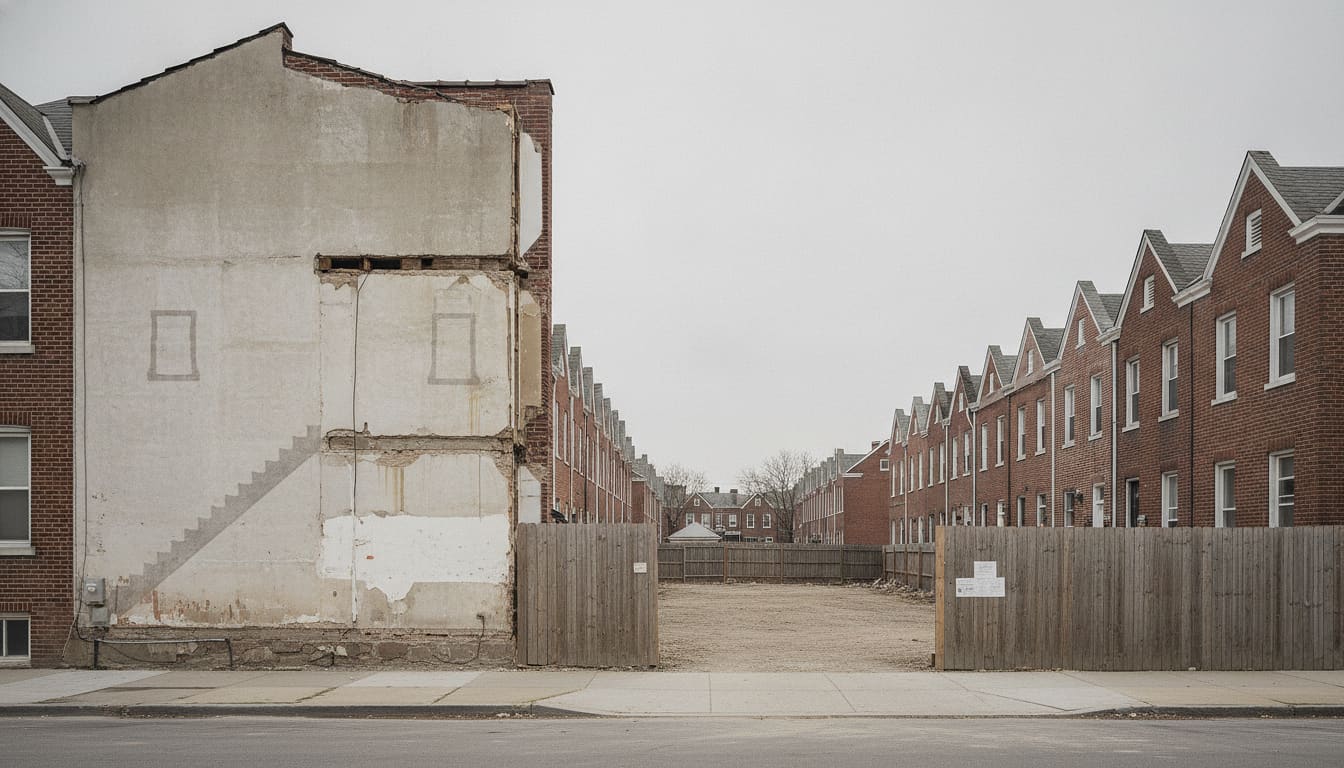
This is the defining condition of demolition in much of Queens, and it is the part most worth understanding before you start.
Through Elmhurst, Woodside, Maspeth, Ridgewood, Glendale, Middle Village and Astoria, a great deal of the housing stock is attached or semi-attached brick, and where we work goes through what that means street by street. When a structure shares a wall, taking your side down exposes a wall that is not only yours.
That wall was built as an interior condition. Once your structure is gone it is an exterior one, facing weather it was never detailed for, and it will usually need to be made good and weatherproofed. That work is part of planning the job, not an afterthought, and we raise it at the survey rather than after the fact.
The same applies to a rear extension coming off the back of an attached house. What gets exposed, and what it needs, is settled before the first day.
Access, the street and the container
On a Queens lot built out to the property line there is often nowhere on the site to put anything. The job then runs entirely off the street, and that shapes both the schedule and the price.
What we work out before quoting:
- Whether equipment can physically reach the structure. A garage at the back of an attached house with a four-foot side passage is a hand job, not a machine job, and it costs accordingly.
- Where a container can legally stand, and for how long, given the curb space actually available.
- Alternate-side parking, which decides which days and hours are usable at all.
- The carry distance, from the structure to wherever the container can stand.
- Overhead and boundary constraints, including lines, neighboring structures and how close the work is to the property line.
None of this is exotic. It is just the difference between a schedule that holds and one that does not, and it is why we look at a site before quoting rather than pricing from a description.
When a permit is needed
Taking down a structure in New York City is permitted work. A full demolition requires a Department of Buildings permit, and the filing is done by a registered design professional. Partial demolition is normally filed as an alteration.
The filing sits with your architect or expediter, who is registered to make it. What we will do is tell you plainly whether what you are describing is permitted work, so you can start that process at the right time. It is worth beginning early, because approvals are frequently the longest item in the schedule.
The order it actually runs in. A registered design professional is engaged and surveys the structure. Utilities are disconnected and the disconnections are evidenced. Plans and the application go to the Department of Buildings. The permit is issued. Then the structure comes down. Work that starts before the permit is issued is the expensive mistake in this sequence, and it is the reason to begin the paperwork before you book a crew.
Every job is different. Tell us yours and we will tell you what it takes.
Call (929) 205-0638Where the material goes
A structure produces a great deal of heavy material, most of it masonry, and in New York City it leaves the site with a registered carter and has to reach a registered facility.
That gets planned first, because it drives the schedule. We work out roughly what volume the structure will produce, where a container can stand, how many times it will need changing, and how material reaches it. On a site with no driveway, the answer to that last question is often the constraint the whole job runs on.
Material is separated as it comes down rather than sorted from a pile afterwards. The site is left clear and level.
Foundations and slabs are their own part of the job. Where a takedown includes breaking out footings or a floor slab, that is concrete removal, and it is priced separately because the weight and the disposal are different.
What drives the cost
A number for a takedown comes from the structure and the street it stands on, and two houses on the same block can differ sharply. These are the things that move it.
What the structure is made of. Masonry and concrete weigh several times what timber framing does for the same building, and weight is what disposal is priced on.
Size, and how much of it is coming down. A full takedown and a rear extension are different jobs.
Whether it is attached. A shared wall means protection, a controlled sequence and making the exposed wall good afterwards.
Whether machinery can reach it. The single largest swing on a small structure. Machine access and hand demolition are not close in cost.
Where the container stands and how far material is carried. Usable curb space depends on the street, and on some streets it depends on the day.
What is inside and underneath. Utilities to isolate, and whatever is below a slab, can change the sequence.
Describe the structure, what it is attached to, and how a vehicle could get near it, and we can usually give you a range on the phone.
Tell us what you have and we will tell you what it takes.
Call (929) 205-0638Questions
When should a building be demolished?
It is usually a cost question rather than a condition question. A structure comes down when what you want cannot be reached by repairing what is there, or when repair costs more than replacement.
Common reasons in practice: a structure is unsound or has been damaged beyond economic repair, a garage or extension has reached the end of its life, the footprint is in the way of what you are building next, or repeated repairs have stopped making sense.
If you are genuinely undecided, that is a question for an engineer or an architect rather than for us. We can tell you what taking it down would involve, which is often the number that settles it.
What happens to the wall I share with my neighbor?
It stays, and it needs attention.
A shared wall between attached houses was built as an interior wall. When your side comes down, that wall becomes an exterior one, exposed to weather it was never detailed for. It normally has to be made good and weatherproofed.
We plan for that from the survey, so it is part of the scope from the start rather than something to discover after the structure is already gone. We also plan the takedown sequence itself around the shared wall so it is protected during the work, not just repaired afterwards.
If the neighboring property is owned by someone else, that is a conversation worth having with them before the work is scheduled.
What is building demolition?
It is taking a structure down, in whole or in part, and clearing the material away. That covers a whole house, a garage or shed, a rear extension coming off the back, or an upper floor removed with the rest left standing.
The distinction from interior demolition is what stays. Interior work takes the inside apart and leaves the building standing. Building demolition takes the structure itself down.
How do I get a demolition permit in NYC?
Through the Department of Buildings, and not directly by you. The application is made by a registered design professional, normally the architect or expediter on your project, because the filing has to be made by someone registered to make it.
What the department wants to see is the structure surveyed, the utilities disconnected and evidenced, and plans filed for the work. A full demolition is filed as demolition. Partial demolition, where part of the structure comes off and the rest stays, is normally filed as an alteration.
The practical advice is to start it early. Approvals are routinely the longest item in a demolition schedule, and a crew cannot begin until the permit is issued.
How much does it cost to demolish a house?
It depends far more on what the structure is made of and how a machine can reach it than on the floor area.
Masonry weighs several times what timber framing does for the same building, and disposal is priced on weight. A structure a machine can reach and one that has to come down by hand through a four-foot side passage are not close in cost. Whether it is attached matters too, because a shared wall means protection, a controlled sequence and making the exposed wall good afterwards.
Describe the structure, what it is attached to and whether a vehicle can get near it, and we can usually give you a range on the phone.
Tell us about the structure
Describe what it is, what it is attached to and whether a vehicle can get near it, and we will tell you what it involves.